Electric burr grinders for fresh coffee, set to the way you brew
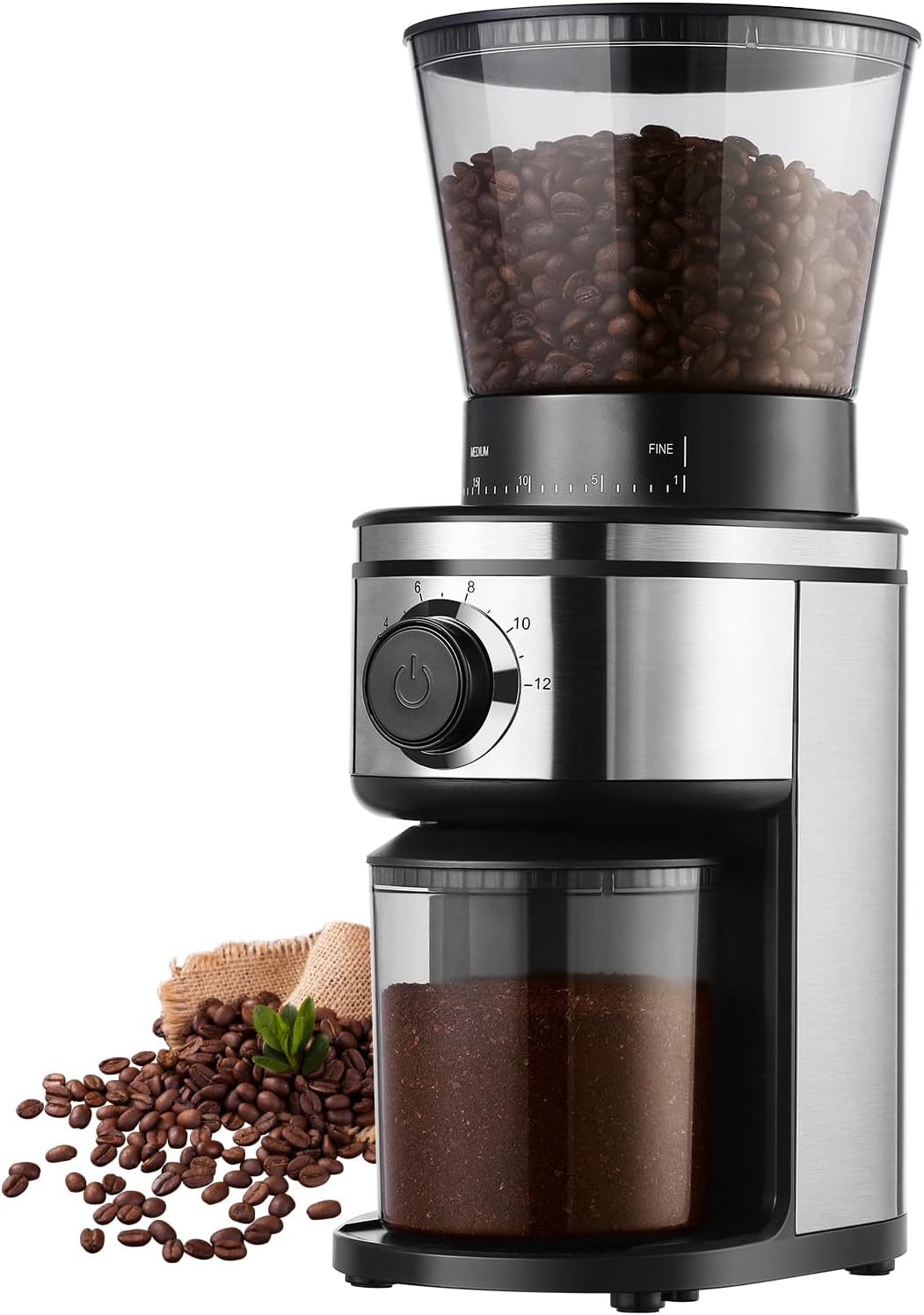
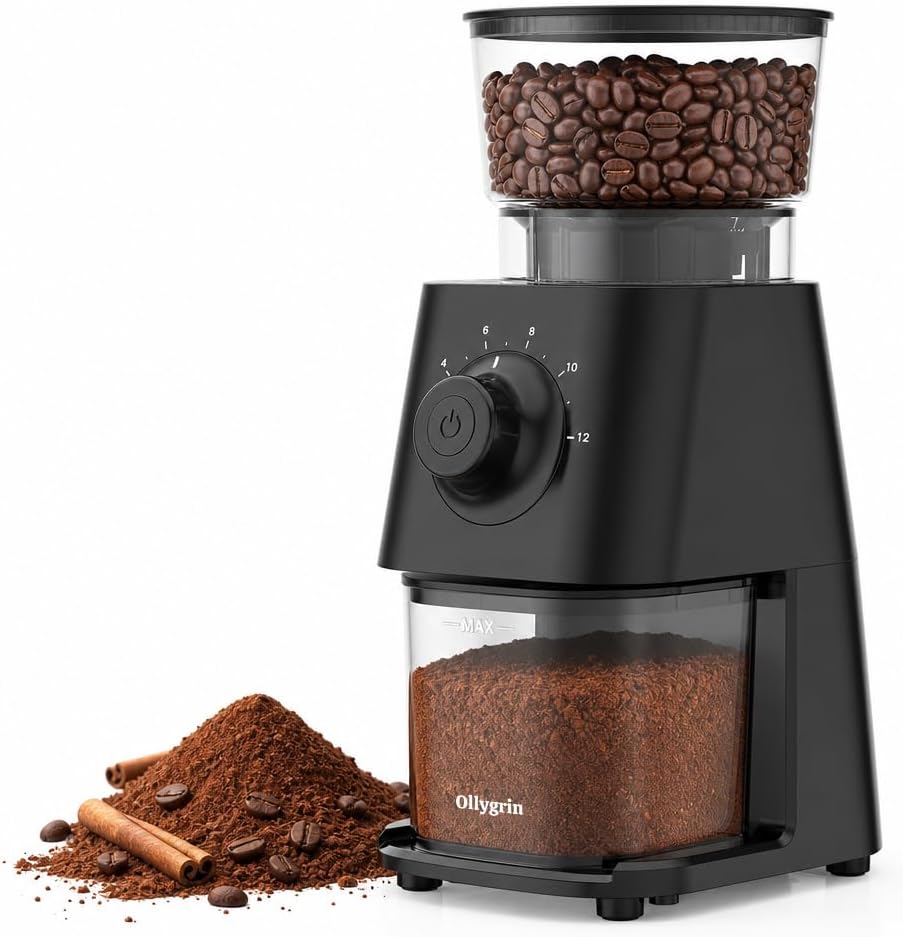
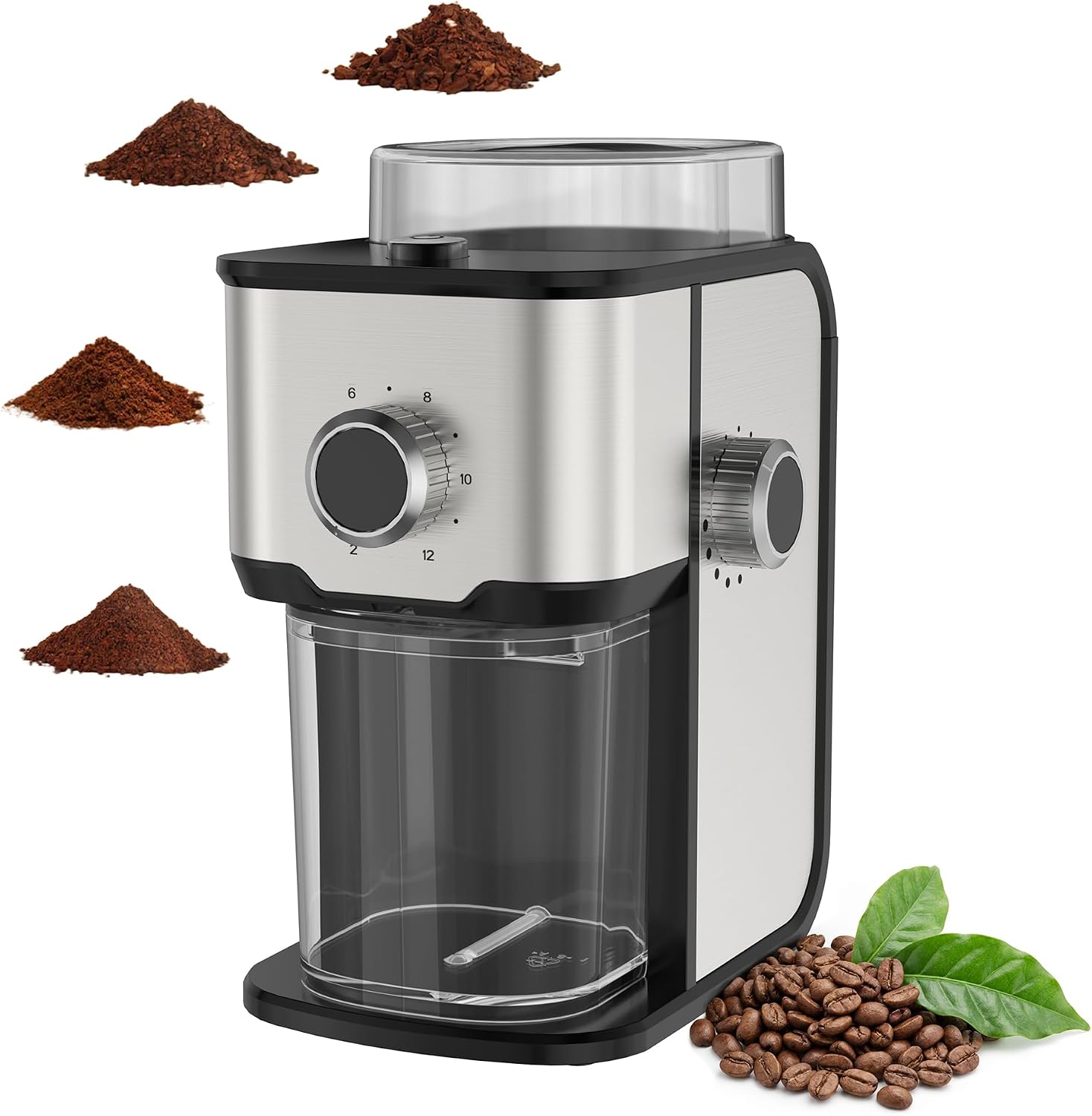
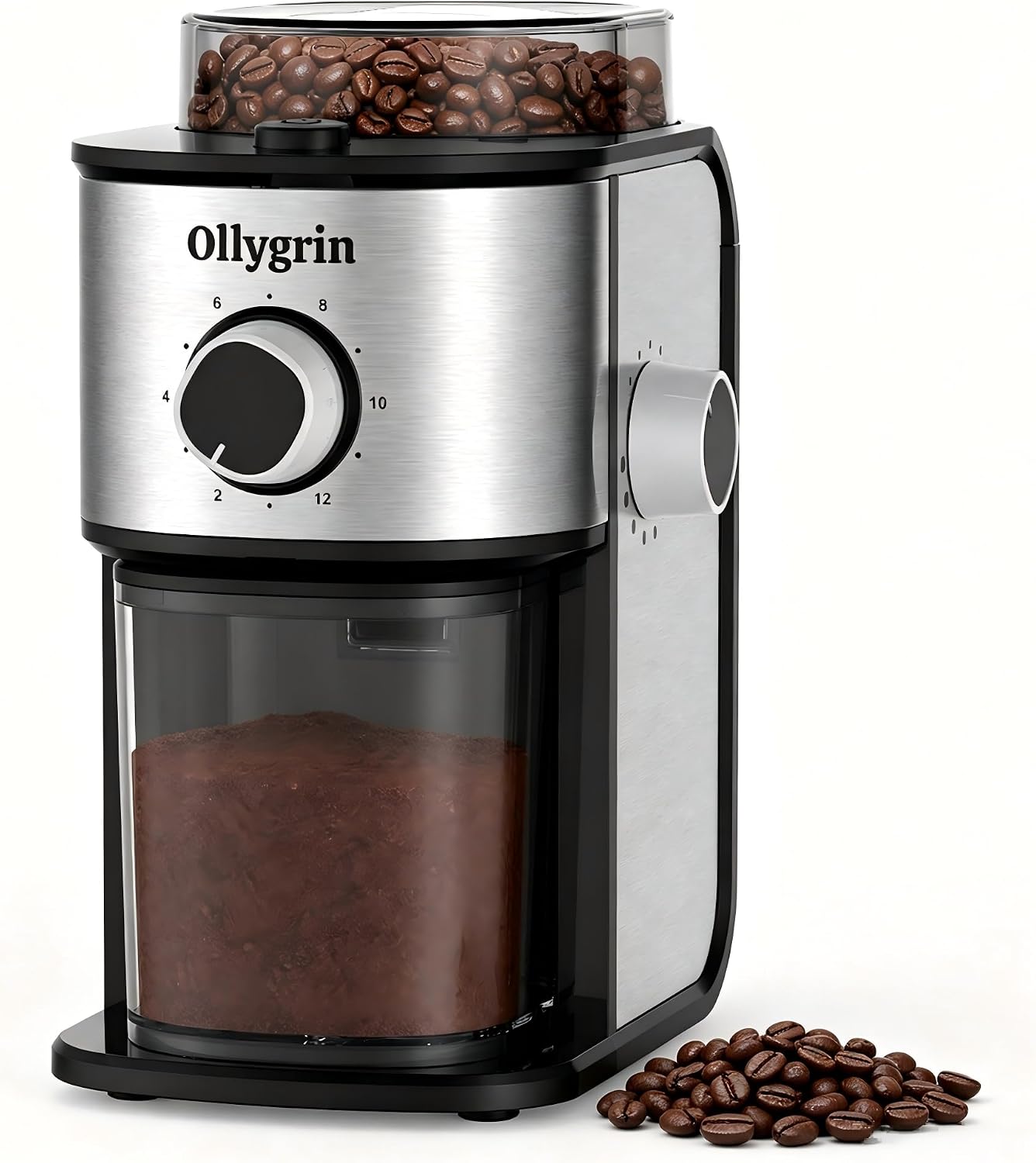
A burr grinder crushes beans between two burrs set at a fixed gap, so you get an even grind instead of the dust-and-chunks mix a blade grinder leaves. Ollygrin grinders come in two styles: 30-setting conical models if you switch between espresso, pour-over and French press, and a shorter 14-setting flat burr grinder if you brew one way most mornings.
Every model has a 2-12 cup dial, a removable grounds bin and parts that come off for cleaning. The differences are how finely you can tune the grind, how many beans it holds and how much space it takes.
Clear fine, medium and coarse zones, less to think about
7 oz hopper and the same 2-12 cup dial
About 8.2 inches tall, the shortest Ollygrin
Bigger jumps between steps, so less fine-tuning for espresso
Don't choose on setting count alone. If you only make drip coffee, 14 steps is plenty. If you pull espresso and want to fine-tune shot time, the extra steps on a 30-setting model make that a lot easier.
Good to Know Before You Order
30 settings, but still stepped
Thirty positions mean smaller jumps than fourteen, which helps when an espresso shot runs a little fast. It is still a stepped grinder, not a stepless one. If you only make espresso with an unpressurized basket, a dedicated stepless espresso grinder gives you finer control.
The cup dial isn't a scale
The 2-12 cup dial tells the grinder roughly how much to grind before it stops. Beans differ in density, so "6 cups" won't weigh the same every time. That's fine for a daily pot of drip. For espresso or recipes in grams, weigh your dose.
Anti-static cuts static, not all of it
The compact anti-static model reduces grounds clinging to the bin and scattering on the counter. Very dry beans and dry winter air can still build some charge. Some owners stir their beans with a damp spoon before grinding, which helps on any grinder.
Built for home, not a café line
These are household grinders, made for batches of a few cups at a time. They aren't designed to run nonstop through a morning rush. The BG702S-PG also has built-in overheat protection for the motor.
Grind Size by Brew Method
There's no single magic number. Start in the right zone, brew, taste, then move one step at a time.
Brew method
Where to start
If it tastes off
Espresso
Fine end of the dial. 1-5 on the BG702S-PG
Shot runs fast and sour: go finer. Machine struggles to push water through: go coarser.
Moka pot
Fine, a little coarser than espresso
Bitter or harsh: try one step coarser.
Pour-over
Medium. 6-20 on the BG702S-PG
Drains fast and tastes weak: go finer. Drains slowly and tastes bitter: go coarser.
Automatic drip
Medium. 6-20 on the BG702S-PG
A full pot drains slower than two cups. If it tastes heavy, go a step coarser for big batches.
AeroPress
Medium territory, set by your recipe
Keep the recipe the same and move one step at a time.
French press
Coarse. 21-30 on the BG702S-PG
Lots of sludge or hard to press: go coarser. Weak after a full steep: a little finer.
Cold brew
Coarse. 21-30 on the BG702S-PG
Weak after the full steep: go finer before adding more coffee. Bitter or slow to filter: go coarser.
•The numbers above come from the BG702S-PG manual. Other Ollygrin models number their dials differently, so a setting borrowed from another grinder is a starting point, not a rule.
•Grind size is one variable out of several. Dose, ratio, water temperature and roast can cause the same symptoms, so change one thing at a time and taste.
•Opened a new bag? Start near your old setting and adjust from there. Light roasts are denser than dark roasts, so the same number won't always give the same cup.
A gear-reduction drive turns the burrs slower to cut down on friction heat. The hopper locks shut when you lift it off, the upper burr twists out for cleaning, and a brush comes in the box.
Takes up less counter space than the BG702S-PG. The bean hopper, grounds bin and the burr parts you can reach all come out for cleaning. Size is for the documented AEK-US-BG710-01 version.
Almost 4 inches shorter than the BG702S-PG, which matters under low cabinets or on a crowded coffee station. Flat burrs can give a fairly even grind, though alignment, motor speed and burr design matter just as much as burr shape.
•The BG702S-PG and the compact anti-static model both have 30 settings, but they are different designs. Only the compact model has the anti-static system.
•Sizes and weights are approximate. Check the Amazon listing for the exact version you are ordering.
IT does an excellent job; really..Impressed with the fine grind speed 4.5 sec for my 3 cup moka pot..easy to use. simple design...I do like espresso ground and it is a smooth even grind consistency. Its tight and packs perfect..I think the value for money is superior compared to others of similar design with the gold logo that do the same thing...size is about the same space as 4 cup coffee maker...As for durability it seems well made and looks as though it will grind coffee for many mornings to come...FYI..I only use a moka pot and the grind is perfect for a flavorful smooth sip.
Biz Trailer
Does a Great Job. Very well designed.
It’s very powerful and still sounds very quiet considering how much work it does. Set and forget seems to give consistent results. Emptying the container into the 58MM portafilter takes a little getting used to but not a problem. I use one click less than the finest setting and just above the lowest setting for timer. No static issues. The one I replaced was a good unit but I like this design better.
JerseyDave
This is the best grinder I've ever owned. I want a bold cup of coffee from my drip coffee maker so I try to use dark oily beans with a grind on the course side with minimal fines (powdered coffee that forms clumps). I've tried 3 other grinder's over the last year. One had flat burrs which generated the most fines I think due to the burrs spinning at a very high speed. One of the 2 conical burr grinders was okay after I took it apart and increased the size of the discharge opening and the distance between the burrs, but still produced some fines static. It stopped working after 9 months. The next conical burr grinder produced too many fines and made a mess with static. I chose the Ollygrin because it gears down the motor and grinds at a slower speed, I'm seeing a consistent grind right out of the box with no fines and no static. I did notice that these burrs have much sharper edges than the other grinders. I take my grinders apart and clean them daily, and this one is easy, by taking the hopper off, and unscrewing the top burr. A note on static. I measure my beans out, run a spoon under the tap and dunk the spoon into the beans a couple of times before I put them in the hopper, result is no static, no mess and no wasted grounds. This one looks very similar to a more expensive Oxo grinder. I highly recommend.
firstsscreen
So far works great. Seems to be as good value. All Burr grinders make noise, this is not terribly loud. It has a neat appearance and since it functionally holds a few days worth of beans in the hopper, can set by the coffee maker on the countertop.
Jeff Dew
Got this for my wife's birthday. She's been using it every day for a month now and actually loves it.
I should note that she uses it to grind enough for a default setting single shot.
It's surprisingly quiet and clean. I can barely hear it when I'm in the next room over unless I'm paying attention.
One of the best things about it is it grinds in a concentrated spot. So she's got this stove thing with a small receptacle for the grind. She can place the single-cup percolator directly in the grinder and then go right to the stove without having to transfer the grinds. No mess, no noise, fine grind. It was exactly what I was hoping for.
We've been together 20 years and I can't think of the last time a present went so well. So there it is. I would recommend this to anyone who wants a good compromise on price and quality. She uses the finest setting for her stovetop percolator.
I hope it lasts!
AF
I have been using a Cuisinart grinder for years and am on my 3rd one of the same model. I was happy with it while it worked but it was the only one I had used. I decided to try something new this time around and this Ollygrin brand coffee grinder happened to be on sale and had all the features I had wanted, which were basically a wide array of grind sizes from fine to coarse (and I don't even know why because I never even use the coarse). Anyway, I now wish I had switched years ago! This grinder is so much quieter, for one. I don't mind grinding coffee but the Cuisinart was not only loud, but annoying. I thought that was just the sound of coffee beans being ground, but nope it was just my grinder. This machine, however, works hard but is considerate. The fine grind, is VERY fine. The photo I've taken of the coffee grinds was on the 3rd dot from the finest. It doesn't hold as much as the Cuisinart but it is a smaller and slimmer design, which I prefer and is easy to fit in my kitchen space. You can also adjust the amount you want to grind by cup, from 2 to 12. The design is beautiful and I feel like I have a much better relationship with my coffee grinder since I've switched to this one. It's easy to clean, easy to use, I just hope it lasts. So far I absolutely love it and would highly recommend it, especially if you like fine grinds/espresso and value reduced noise pollution in your home.
Jessica
Using and Cleaning Your Ollygrin
1
Lock every part in place before you start
Set the grinder on a dry, steady counter. The hopper, upper burr and grounds bin have to be seated properly. On models with a safety interlock, the motor won't run until they are.
2
Pick the grind first, then the cup amount
Choose your grind setting, add whole beans without going past the hopper's limit, then set 2 to 12 cups and press start. When the cycle ends, take out the bin and brew right away.
3
Grind for the brew in front of you
Ground coffee loses aroma fast, so don't fill the bin for the next three days. Beans you won't grind soon keep better in an airtight container away from heat, light and moisture than sitting in the hopper.
4
Change settings the way your manual says
The adjustment works differently on each model. Going from coarse to much finer, follow your grinder's instructions so you don't force beans that are already caught between the burrs.
5
Brush out the burrs regularly
Unplug the grinder, lift out the hopper and the upper burr, and use the included brush on the burrs, chamber and chute. On the BG702S-PG, lift the burr handle, turn it counterclockwise and pull it up. Line it up and lock it when it goes back in.
6
Wash only the parts marked washable
Hopper and grounds bin parts must be completely dry before they go back on. Never put the motor base in water.
Time to clean when you see more grounds left behind than usual, slower output, a stale smell, oily residue or more clumping. Dark and flavored roasts leave residue faster.
Skip the rice trick. Uncooked rice puts extra load on the motor and can leave starch inside the grinder.
Switching beans? A quick brush-out is worth it when you go from flavored to unflavored coffee, or from an oily dark roast to a dry light roast. The BG702S-PG hopper locks shut when removed, so leftover beans stay put while you swap.
Never put fingers or metal tools into an assembled grinder while it's plugged in, even to clear a blocked chute.
About Ollygrin
Ollygrin makes coffee equipment for home kitchens, mostly electric burr grinders and espresso appliances. The controls are the kind you already know, a grind dial and a cup dial, rather than a café grinder's workflow.
The grinder lineup isn't one machine in three colors. The 40 mm conical BG702S-PG holds the most beans and gives the widest adjustment. The compact anti-static model saves counter space and keeps grounds from making a mess. The 14-setting flat burr grinder keeps things short and simple. Each one is built for a different kind of kitchen.
If you're coming from pre-ground coffee or a blade grinder, what you gain is control. A blade chops some pieces to dust and leaves others large, and those extract at different speeds. Burrs set the gap the coffee passes through, so the grind stays in a useful range and your cup is easier to repeat.
Every Ollygrin does the same basic job. Whole beans go in, the grind is set for your brewer, and fresh grounds come out. Once you find your setting, you can come back to it every morning without timing a blade grinder or judging grind size by eye.
Ollygrin FAQ
Ollygrin is a home coffee equipment brand focused on electric burr grinders and espresso-related appliances. Its grinder lineup includes conical and flat burr models with adjustable grind settings, removable components, and dosing controls designed for everyday home brewing.
The range covers several brewing methods rather than being limited to one style of coffee. Depending on the grinder, users can prepare grounds for espresso, drip coffee, pour-over, French press, cold brew, and similar methods.
Ollygrin conical grinders use a cone-shaped inner burr surrounded by an outer burr. The flat burr model uses two ring-shaped grinding surfaces positioned parallel to each other.
Both designs produce a more controlled grind than a blade grinder. The larger practical difference within the Ollygrin range is adjustment. The conical models offer up to 30 grind settings, while the compact flat burr grinder uses 14 settings.
A 30-setting model gives more room for small grind adjustments. The 14-setting model keeps the process simpler for users who mainly brew with one or two methods.
The 30-setting conical burr models provide the most adjustment for espresso because the smaller steps between settings make it easier to control how quickly water passes through the coffee puck.
Espresso generally requires a fine grind, but the finest possible setting is not automatically the correct one. The exact position depends on the coffee, dose, espresso machine, basket type, and desired extraction time.
Users with an unpressurized portafilter basket may need more precise adjustment than those using a pressurized basket.
Yes. Ollygrin burr grinders cover the coarse grind range commonly used for French press.
Start toward the coarse end of the adjustment scale and change the setting based on the result. If the coffee contains excessive sediment or becomes difficult to press, move slightly coarser. If the brew tastes weak despite an appropriate steep time and coffee dose, a somewhat finer grind may help.
Yes. Cold brew usually works well with a coarse grind, which is available on both the 14-setting and 30-setting Ollygrin grinders.
Long immersion recipes generally use a relatively coarse setting because the coffee remains in contact with water for many hours. Faster cold-brew recipes may require a finer grind.
The ideal setting depends on steeping time, coffee-to-water ratio, and filtration method.
The number depends on the model.
Ollygrin's conical burr grinders are available with 30 adjustable grind settings, giving users a broad range from fine espresso-oriented grinding to coarse French press and cold brew settings.
The compact flat burr grinder has 14 grind positions. It covers the same major brewing categories but uses larger steps between settings.
More settings provide finer adjustment. They do not automatically produce better coffee unless the extra control is useful for the brewing method.
The 2-12 cup control determines approximately how much coffee the grinder dispenses before stopping.
It is a dosing convenience rather than a precision measurement system. Coffee beans differ in density, and the output can vary with grind size and bean type.
For routine drip coffee, the cup selector can make daily use faster. For espresso or recipes measured precisely by weight, a separate digital scale provides more repeatable results.
Capacity varies by model.
The BG702S-PG 30-setting conical grinder has a 10 oz bean hopper, making it suitable for households that grind several servings before needing a refill.
The compact anti-static conical model uses a smaller 4.59 oz hopper. The flat burr model has a 7 oz hopper.
A larger hopper reduces refill frequency. A smaller hopper can be more convenient for users who measure beans for each brew or switch between coffees frequently.
The anti-static system is designed to reduce the electrical charge that develops when coffee beans fracture during grinding.
Static can make lightweight coffee particles cling to the grounds container, remain around the chute, or scatter onto the counter. Ollygrin's anti-static conical grinder is designed to reduce this effect and make transferring grounds cleaner.
Static can still vary with humidity, roast level, and the moisture content of the beans, so no household grinder can guarantee completely static-free grinding under every condition.
Unplug the grinder first, then remove the detachable hopper, grounds container, and accessible burr components according to the instructions for the specific model.
Use the included cleaning brush to remove dry coffee particles from the burrs, chamber, and exit chute. Coffee oils and fine particles can accumulate over time, particularly when dark or oily beans are used.
Only wash parts identified as washable in the product instructions. Any washed components should be completely dry before being reinstalled. The motor base should never be immersed in water.
There is no fixed cleaning interval that works for every household.
A grinder used several times per day will need attention sooner than one used only on weekends. Dark, oily roasts also leave more residue than many lighter roasts.
Visible buildup, increased retention, stale odors, slower grinding, excessive clumping, or grounds collecting around the chute are all signs that cleaning is worthwhile.
Regular brushing is easier than waiting for a large amount of residue to accumulate.
Yes. A setting that works well for one coffee may not work equally well for another.
Bean density changes with origin, processing method, roast level, age, and other factors. These differences affect how coffee breaks apart and how quickly water extracts flavor from the resulting particles.
When changing beans, start near the previous setting and adjust based on brew time and taste. Espresso usually shows these differences most clearly, but filter coffee can require adjustment as well.
No. Ollygrin grinders are designed as multi-purpose home coffee grinders.
The adjustable burr systems cover fine, medium, and coarse grinding for espresso, automatic drip machines, pour-over brewers, French press, cold brew, and other common preparation methods.
Users who make several types of coffee may benefit most from a 30-setting model because it offers more positions between the fine and coarse ends of the adjustment range.
A burr grinder controls particle size by passing coffee through a defined space between two grinding surfaces.
A blade grinder repeatedly chops beans inside a chamber. Some pieces can become very fine while others remain considerably larger, making extraction harder to control.
Burr grinding gives the user a repeatable grind setting that can be matched to the brewing method. Once a suitable setting is found, the grinder can return to approximately the same particle size for the next batch without relying on grinding time or visual judgment.
Ollygrin grinders are built primarily for home and similar light-duty environments where coffee is prepared in individual or household-sized batches.
Their compact footprints, removable grounds containers, adjustable dosing, and 2-12 cup controls are intended for normal countertop use rather than continuous commercial café service.
Different models suit different setups. The larger conical grinder prioritizes hopper capacity and broad adjustment, the anti-static model focuses on a compact and cleaner workflow, and the flat burr grinder provides a shorter body with simpler 14-step control.
Grind It Fresh, Set It for Your Brewer
Go with 30 settings if you make espresso or switch brew methods, and 14 if you keep it simple. Then grind right before you brew. Whole beans in, the right grind out, coffee ready for the next step.